From Berlin Streets to Oklahoma City Homes
On May 5, 1955, the Allied occupation of Germany ended. The date marks a turning point in world and German history.
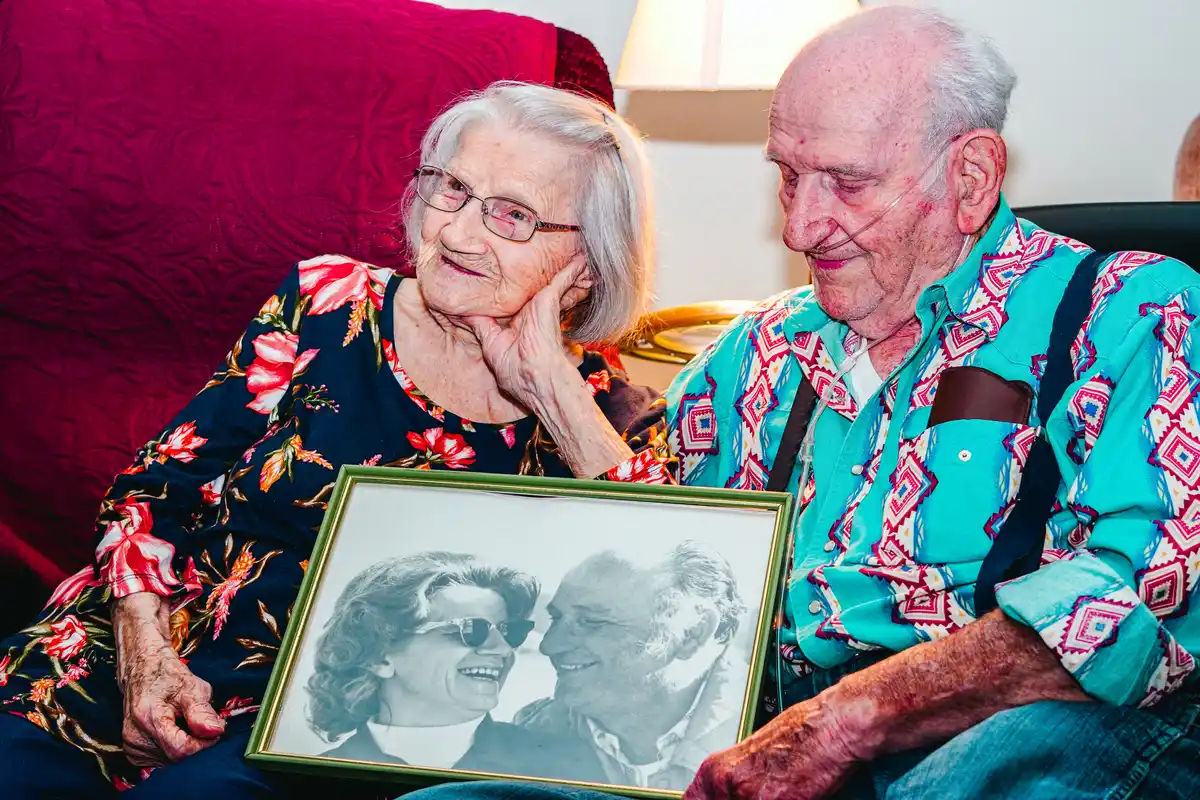
1955 is also the year C.M. and Margareta Wilson met and married. C.M. was a member of the United States Air Force in President Harry S. Truman’s military, and Margareta was a German survivor of World War II.
This August, the Wilsons celebrate their 70th anniversary.
Over seven decades, C.M. and Margareta traveled the world, raised children, and spent thirty years in Colorado, where C.M. would go hunting in the mountains with their sons for a week each hunting season, before settling in Oklahoma City twenty-two years ago.
Growing Older, Together
“We’ve had a good life together,” C.M. says.
In their youth, the lovebirds raced through the streets of Berlin on C.M.’s motorcycle.
Today, their lives move much more slowly.
They find joy in the small things: their faith, weekends spent preparing familiar German recipes, visits from their children and quiet moments in their living room, surrounded by cherished keepsakes — war medals, family photos and Margareta’s knitting.
Their love story is the kind you read about in history books; it is love that has held them together through the good and bad times.
“We try to take care of each other; sometimes that’s hard,” C.M. says.
The Challenges That Come with Aging
Growing old has not been easy for the Wilsons. They face several health challenges and frequent doctors’ visits.
C.M. requires the use of a breathing machine to support his lungs, which function at only 40 percent of their capacity — it’s why the Wilsons traded Colorado’s high altitude and Rocky Mountains for Oklahoma City’s low elevation, grassy plains and gentle, rolling hills. C.M. is also a diabetic and suffers from diverticulitis, the presence of small pockets along the wall of his colon that cause pain, fever, swelling and bloating.
Margareta, who also suffers from diverticulitis, is pre-diabetic and receives regular shots to treat fluid build-up behind one of her eyes. The condition affects her vision and balance.
The Wilsons also endure the natural aches, pains and difficulties that come with aging, making basic activities burdensome.
Before Meals on Wheels, which they started receiving after being on the waitlist for seven weeks, cooking was an all-day event: from early mornings, preparing breakfast and lunch, to taking a nap, eating lunch and then cooking supper, leaving little downtime.
The Power of Senior Independence and Community Support
Thanks to Meals on Wheels Oklahoma City, life and meal preparation are less complicated for the Wilsons; they are more independent, and the quiet moments they love to savor together are more frequent.
“We have more free time,” C.M. says. “We enjoy it.”
The meals, which they receive five days a week, are perfectly portioned and packed with enough nutrients to soothe aching muscles and bones.
“[Meals on Wheels] gives us nourishing meals and strength,” C.M. says.
They especially love the pork loin and occasional cookies and cakes.
The personal touches from their local provider, such as the Bible verses on Tuesdays, birthday cards and Valentine’s Day cards from the childcare center, make the couple feel especially loved.
The people who make Meals on Wheels possible are a reminder that, no matter how far the Wilsons travel, they feel supported.
“We moved all over the world, and there are good people everywhere,” C.M. says. “It depends on what you make of it.”
Community, faith, nourishing meals, the quiet moments and their love are enough.